|
Gary Nila is a former Los Angeles
Police Department police officer and FBI Special Agent who now works as an investigator with Northrop Grumman Corp. Air Combat
Systems. He has been a collector of World War II Japanese military uniforms and equipment for over 30 years, but specializes
in researching and collecting Japanese naval flight equipment and dress. He has interviewed many former IJN pilots including
Saburo Sakai, Sudamu Komaichi, and Masajiro Kawato.
Gary Nila is the co-author of
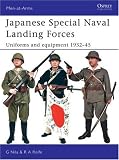
Japanese Naval Aviation Uniforms and Equipment 1937-45 (Elite); Japanese Special Naval
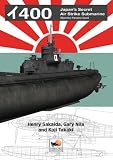
Landing Forces: Uniforms and equipment 1937-45 (Men-at-Arms); and, I-400 Japan's Secret Aircraft-Carrying
Strike Submarine - Objective Panama Canal.
According to the book description
of I-400 Japan's Secret Aircraft-Carrying Strike Submarine, “The I-400 'super submarine'
was one of the most monstrous creations to emerge from the Second World War and in its time it was the largest submarine ever
built. It was considered to have been one of Japan's most secret weapons - indeed the Allies remained unaware of its existence
until it surrendered in late August 1945. At more than 400 ft long, weighing 5,700 tons, carrying a crew of 200 and possessing
a range of over 50,000 miles, the I-400 carried three Seiran attack floatplanes in a hangar built on to its deck ahead of
the massive conning tower. The Imperial Japanese Navy tasked the I-400 with a secret mission to attack American cities and
to destroy the Panama Canal. This book is the result of many years of meticulous research. The authors have traced and interviewed
three of the original six pilots slated to fly the Seirans on their hazardous missions. They have revealed - for the first
time - the story their aircraft being painted in fake US markings for their final mission. The book contains hundreds of astonishing
photographs, many previously unpublished, showing the I-400 from both outside and inside as well as its hangars and aircraft.”
One reader of I-400 Japan's Secret Aircraft-Carrying Strike Submarine said,
“I recently purchased a copy of this book and it is simply superb. It covers an important part of Japanese
navy history about the immense I-400 class submarines and their mission to do suicide strikes on the Panama Canal. This book
is loaded with rare photos, excellent veteran accounts and drawings. I enjoyed reading it a great deal and would gladly read
future works from authors Henry Sakaida, Gary Nila and Koji Takaki.”
According to the book description of Japanese Special Naval Landing
Forces: Uniforms and equipment 1932-45, “The spearhead of Japan's assault landing operations both
in China pre-Pearl Harbor, and in US and British territory post-Pearl Harbor, was provided by the Special Naval Landing Forces
- 12 numbered battalion-size Imperial Japanese Navy units. They garrisoned a number of the islands which the US Marines then
had to re-claim in some of the bloodiest battles of the Pacific War. These included the infamous battles of Iwo Jima and Okinawa.
This book provides a comprehensive treatment of the elite force which has be never before been examined in such detail in
English, covering weapons and equipment as well as uniform and insignia.”
|
|
 |
|
One reader of Japanese Special Naval Landing Forces:
Uniforms and equipment 1932-45 said, “Gary Nila has produced a book that collectors will not want to miss.
Unlike most Osprey titles, this one is packed with photos of artifacts and discussions on markings, variants and construction--just
the sort of stuff collectors need and want. Photo quality is wanting, however. Many images are a too dark to see the details
that the author describes. Nevertheless, collecting WWII Japanese material is an area in need of quality research, and author
Nila has filled an important niche. It is well-worth the price. I would have happily paid more for a hardcover edition with
better photographs. I hope Osprey and Nila work out plans for a more comprehensive treatment of this subject.”
According to the book description of Japanese Naval Aviation Uniforms
and Equipment 1937-45, “This long awaited title provides a fantastic reference resource on the uniforms,
dress, flight gear and personal weaponry of the Imperial Japanese Navy airmen of World War II. It includes detailed descriptions
of flight gear, including manufacture information, and interviews with IJN pilots such as Sakai, Komachi, Tanimizu, Kawato
and Saito regarding the use of a variety of equipment are integrated into the text. Packed with great contemporary illustrations,
photographs of original items, and colour pictures, this title provides a meticulously detailed examination of the dress and
equipment of the Imperial Japanese Navy's aviators in World War II.”
One reader of Japanese Naval Aviation Uniforms and Equipment 1937-45
said, “This is a book I highly recommend to students of WWII, aviation historians and collectors of military/aviation
memorabilia. It is not only well researched, it is well written, concise and to the point. Whether a novice collector or a
seasoned old hand, you will find information in this book, both documentary and anecdotal, that you simply won't find
elsewhere. One very pleasing departure from Osprey's normal format is the use of color photographs for the centre layouts
instead of illustrations. Although Mr. Younghusband's graphics of the insignia are excellent, the colors photography,
depicting authentic uniforms and flight clothing being worn, provide excellent attention to detail. Osprey books are typically
great value, almost always useful and informative, but this one is a cut above. Mr. Nila has done great justice to the subject
and although this is a small book, it fills a big gap on the bookshelves of WWII uniform and equipment enthusiasts.”
|
|
|
|
|